Gold futures are under pressure and experiencing a downward trend
The sharp increase in international oil prices has raised concerns about inflation, and the yield of US Treasuries has reached a new high in many years, with expectations of interest rate hikes on the rise. As a result, gold futures have fallen under pressure.
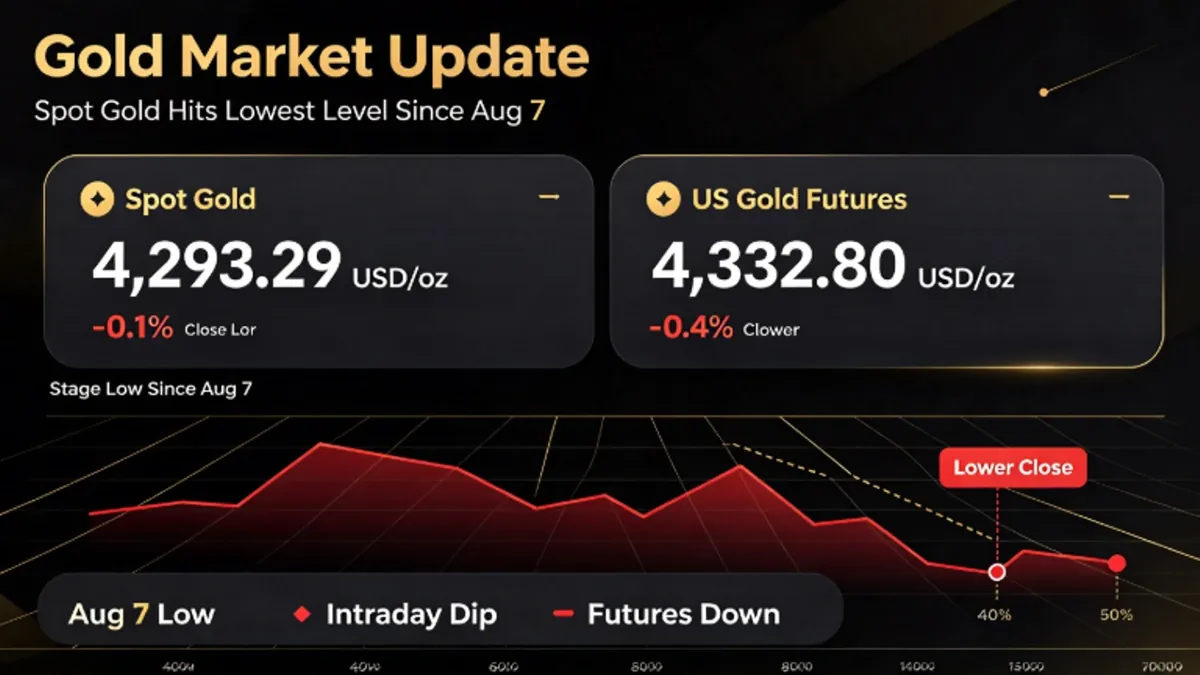
Gold futures closed slightly lower.
Weak sentiment hit the global precious metals futures market, with the leading gold contract edging down. Spot gold fell 0.1% to $4,293.29 per ounce, its lowest since Aug 7th during the session. US gold futures were down 0.4% at $4,332.80 an ounce. Gold did not experience a single-sided sharp decline. It maintained a range-bound pattern overall.
The selling pressure from the bears was steadily released. There was no extreme selling pressure in the market, it was the continuous suppression brought about by macroeconomic negative factors. Short-term bullish funds generally chose to wait and observe, unwilling to actively enter the market. Other precious metal futures performed relatively strongly. Spot silver was up 0.3%, platinum gained 0.7% and palladium was up 0.1%.
The surge in oil prices has driven inflation and raised expectations of interest rate increases.
Recently, the international crude oil market has been experiencing continuous turmoil. Multiple supply disruptions have pushed up oil prices. The key loading port on the Red Sea in Saudi Arabia suspended operations, and in addition, three oil fields in Libya were shut down for maintenance. The short-term global supply gap of crude oil has rapidly expanded. As a result, Brent crude oil soared by more than $3 per barrel in a single day, firmly staying above $109 per barrel.
The increase in oil prices has spread to the industrial, logistics and consumption sectors, pushing up the overall price level. Market funds quickly priced in the risk of an inflation rebound and unanimously predicted that the Federal Reserve's monetary policy would be difficult to loosen and would instead continue to tighten. Now, the market generally expects that the Federal Reserve's interest rate meeting on Wednesday will raise interest rates by 25 basis points, and the benchmark interest rate range will be raised to 3.75% to 4.00%.
The rise of US debt and the strengthening of the US dollar have jointly increased the holding cost of gold.
The strengthening of the US dollar index, combined with the soaring yields of US debt, has dealt a precise blow to the non-interest-bearing asset of gold. The yield of the 10-year US Treasury has risen, reaching the highest level since 2007. The increase in bond yields means an increase in the return from risk-free investments. Gold itself does not generate interest, and a rise in bond yields means a huge decline in the attractiveness of risk-free investments. Gold is priced in US dollars. After the appreciation of the US dollar, the purchase cost for non-US currency investors increases, and overseas buying demand largely decreases. The incremental funds for gold futures bulls are insufficient.
The short-term market situation is highly uncertain.
The focus of the current battle between bulls and bears in gold futures has shifted from inflation data to the latest policy statements of the Federal Reserve. The expectation of this round of interest rate hikes has been largely anticipated by the market in advance, and the short-term decline in gold prices is relatively limited. A simple interest rate hike is unlikely to trigger large fluctuations again. What truly determines the subsequent market trend is the signals released by the Federal Reserve after the meeting. If they continue to raise interest rates, the gold futures will open up a new downward space.
Traditionally, gold is regarded as an inflation hedge tool. An increase in inflation should support the price of gold. However, this round of the market has taken an opposite trend. Currently, the funds are most concerned about not the inflation itself, but the monetary tightening policy driven by inflation. The pressure on gold from high inflation and high interest rates has outweighed the positive support from inflation hedging. As long as oil prices remain high and inflation pressure does not subside, the Federal Reserve cannot turn to easing, and the gold futures are unlikely to experience a trend-based upward movement.