US Treasury yields exceed 5%, US stock futures experience a pullback
US Treasury yields have surpassed the critical level, while crude oil futures have risen sharply. Expectations of interest rate hikes have soared. Major US stock index futures have collectively closed lower.
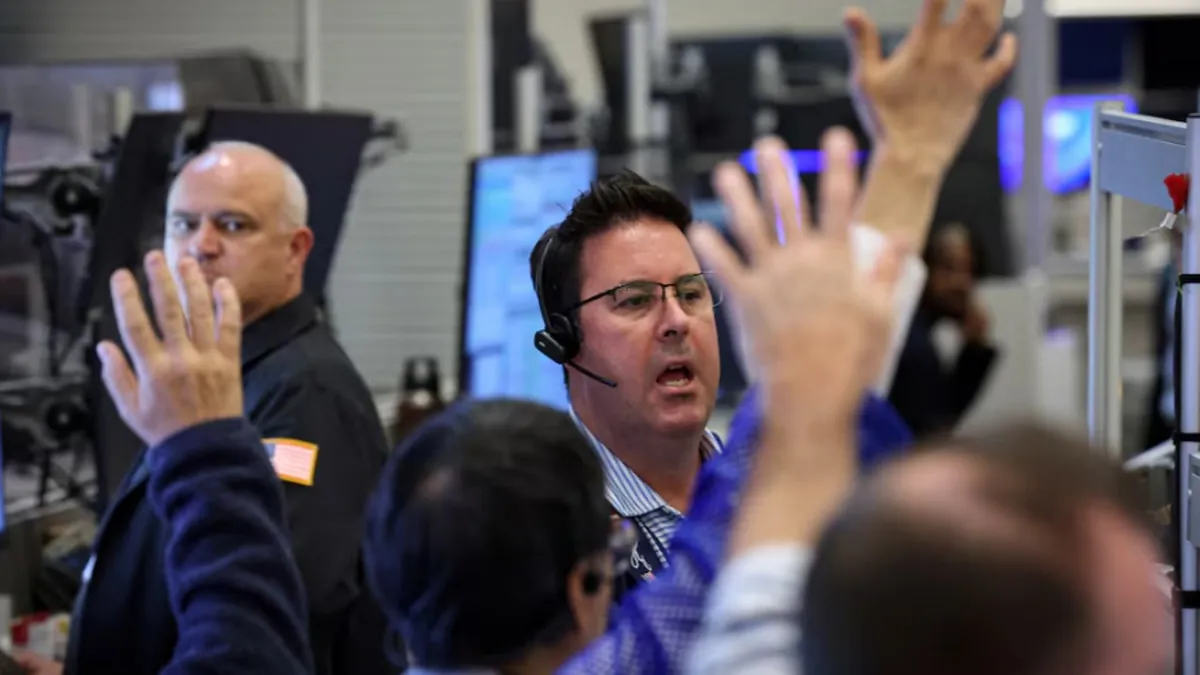
The futures of the three major indices collectively weakened.
The futures market of the US stocks was generally bearish, continuing the previous downward trend. The three core indices all closed lower. The Dow Jones Index dropped by 0.63%, the S&P 500 Index fell by 0.45%, and the Nasdaq Index dropped by 0.78%. The futures of the growth sectors were under the most pressure. The trading activity in the market on that day increased, with a total market trading volume of 1.585 billion shares, higher than the average of the past 20 trading days.
The number of stocks that fell on the US stock market was 2.56 times that of the stocks that rose. The Nasdaq market was also weak. More than 3,000 stocks fell, while the number of rising stocks was less than 1,500. Only a few hundred stocks in the market reached new highs, and more than 600 stocks hit new lows. The Nasdaq even produced more than 200 new low targets. The overall market situation completely entered the risk-aversion trading mode.
Commodities reshape market inflation and interest rate expectations.
The escalation of the situation in the Middle East, with attacks on energy facilities, disrupted the global supply rhythm of crude oil, driving up oil prices rapidly. The WTI crude oil futures rose by 4.4% in a single day, Brent crude oil futures increased by 2.9%, and diesel futures reached a new historical high. In the past two weeks, the cumulative increase in international crude oil prices was close to 25%, with a very exaggerated short-term increase.
Previously, the market predicted that inflation would steadily cool down and that the monetary policy of the Federal Reserve would tend to stabilize. However, the rise in oil and diesel prices has spread the inflationary pressure from the energy sector outward, forming a systemic inflation risk. Data shows that the probability of this round of interest rate hikes has soared from the earlier 33.1% to 94.5%, almost locking in a 25 basis point interest rate hike. This is also the first time that the Federal Reserve has restarted interest rate hikes in more than three years, exerting strong pressure on global risk asset futures.
US Treasury yields have surpassed a key level.
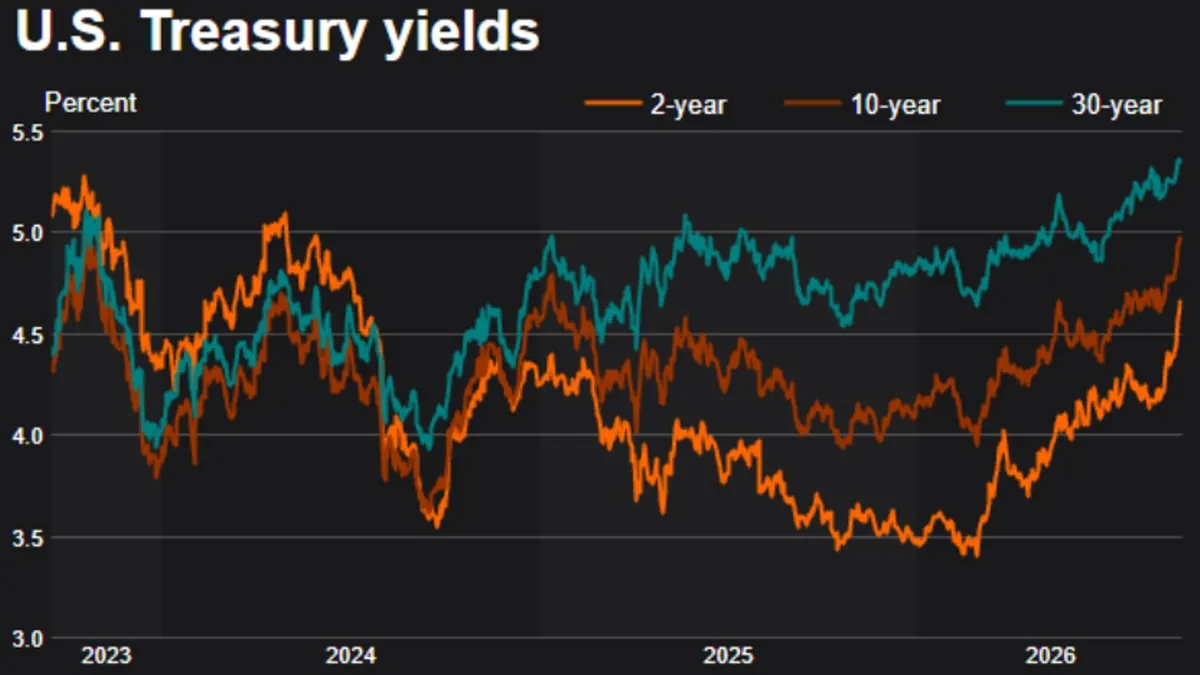
The expectation of interest rate hikes has intensified, causing large fluctuations in the US bond market. The yield of the 10-year benchmark Treasury successfully broke through the 5% mark, reaching the highest level since 2007. The risk-free interest rate has soared, redefining the valuations of various futures and spot assets. The upward movement of interest rates is the biggest negative factor for high-valued assets. Stock futures, cryptocurrency futures and equity futures in the technology sector will all experience valuation contraction due to the increase in discount rates. Especially in the AI technology sector that relies on the realization of future profits, the valuation pressure is the most prominent.
Market institutions generally believe that this interest rate hike is likely not a one-time operation, and there is a possibility of further rate hikes in the future. The root cause of inflation lies in the energy sector. As long as oil prices remain high, inflation pressure will not subside, and the Federal Reserve will find it difficult to ease monetary policy. The long-term high-interest-rate environment will suppress the rebound space of various risk futures.
Energy futures strengthened while cryptocurrencies weakened.
Benefiting from the sharp increase in crude oil futures and the supply crisis in the Middle East, the energy sector soared by 2.3% in a single day, becoming the only safe-haven rising trend in the entire market. Consumption, technology semiconductors became the main drag factors. The Philadelphia Semiconductor Index has been the core driving force for the US stock market's core growth throughout the year, but this round of the market has weakened. Market concerns about the slowdown in the growth of the AI industry have suppressed the valuation of technology growth futures.
The expectation of a major interest rate hike in the market has intensified, risk appetite has generally contracted, and the US Senate failed to advance legislation related to cryptocurrencies, which has once again raised the uncertainty of industry regulation. The cryptocurrency sector has significantly declined. Coinbase fell by 10.1% in a single day, and Strategy dropped by 5.4%. Cryptocurrencies are highly sensitive to interest rates. The high-interest-rate environment will reduce the activity of speculative funds, and combined with the fact that policy implementation is not as expected, short-term bullish funds have withdrawn.