The SpaceX Crew-13 mission successfully arrived at the space station
The SpaceX Crew-13 manned mission was successfully launched. The team completed an unprecedented in-orbit on-site valve repair, avoiding major launch delays through meticulous operations and setting a new record for docking speed.
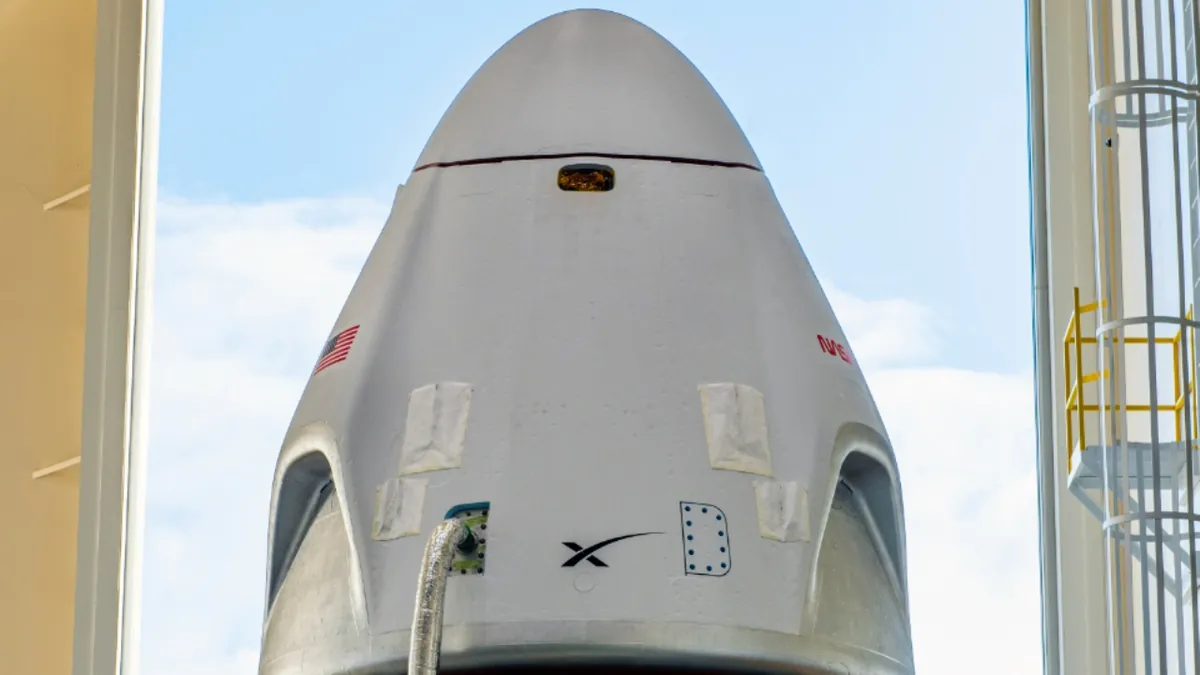
The manned mission was launched successfully setting a new record for the time of rendezvous.
The SpaceX Crew-13 manned mission officially lifted off Thursday morning. The Falcon 9 rocket had the Dragon spacecraft attached to its top, and it fired and lifted off from Launch Pad 40 in Cape Canaveral, Florida. Four astronauts were headed to the ISS to conduct research there for six months. The launch was very efficient. The rocket took off in nine minutes, and the Dragon spacecraft entered the designated orbit smoothly. The spacecraft maintained a stable condition throughout the journey, gradually approaching the space station eight hours after the launch, preparing to complete the docking, setting a new record for the fastest launch and docking of American manned spacecraft.
A sudden malfunction has arisen, and the conventional repair plan is at a stalemate.
The mission was originally scheduled for launch in mid-September, but it was urgently postponed due to a hardware failure of the spacecraft. During the launch preparation stage, the ground detection team discovered that the propulsion system of the Dragon spacecraft had an oxygen leak problem. The root cause of the failure was a damaged internal valve. The repair of this malfunction is extremely difficult. At that time, the Dragon spacecraft had completed all assembly and the cabin had already been filled with nitrogen tetroxide oxidizer.
This medium has strong volatility and extremely high toxicity. The conventional repair process requires completely emptying the propellant and disassembling the entire spacecraft structure. Not only is the process cumbersome, but it will also lead to a long-term delay in the mission and seriously affect the rotation rhythm of the space station personnel. The 12th batch of resident crew members of the space station have been in orbit for nearly eight months and were originally scheduled to return to Earth in mid-October. If the mission is significantly delayed, it will disrupt the regular scientific research and operation rhythm of the space station.
First-ever surgical-style repair.
To balance the launch schedule and maintenance safety, the SpaceX engineering team has finalized a brand-new unconventional repair plan, which is officially referred to as "surgical intervention". This is also the company's first time conducting such high-precision maintenance operations on a fully-fueled and fully-assembled Dragon spacecraft. The team abandoned the traditional mode of emptying fuel and disassembling the spacecraft, and directly carried out precise operations in place. The staff precisely cut the spacecraft's fuel supply pipeline, removed the faulty valve, replaced the new component, and then precisely welded the cut opening. The entire operation did not require disassembling the hull or emptying the fuel, and maximally preserved the original assembly state of the spacecraft.
The operation site was also specially considered. The team did not use the conventional hangar but transferred the spacecraft to the 59th fueling and hazardous handling facility. Here, the space is compact, but the upper passage is suitable for precise operations, and it can properly handle toxic oxidants while avoiding safety hazards. In addition, the team specifically applied for a special permit from the Eastern Test Range of the Space Force to conduct high-temperature welding operations on the spacecraft with full oxidant. The entire process was strictly controlled to manage safety risks. After the repair, the team conducted multiple rounds of sealingity and stability tests. The final data showed that the weld seam was intact, the system pressure was stable, and all indicators of the propulsion system met the standards and fully met the launch requirements.
The mission carries multiple meanings.
This Crew-13 mission is the 13th crew rotation mission for NASA by SpaceX and also its 21st manned spaceflight mission. Since the US space shuttles were retired in 2011, the US has lost its autonomous manned space capability for nine years and relied on Russian spacecraft to travel to the space station. The mature application of the Dragon spacecraft has restarted the US domestic manned spaceflight system.
Another NASA partner, Boeing, has experienced multiple setbacks with its Starliner spacecraft and has yet to completely resolve the technical issues. Its progress is far behind that of the Dragon spacecraft. Currently, SpaceX still has nine Dragon spacecraft flight missions to execute, and the addition of three new contracts has brought the total amount of cooperation between the two parties to $5.92 billion. SpaceX has plans for retired Dragon spacecraft and Falcon 9, and the company will focus on high-end businesses such as Starlink and Interstellar Ship in the future. The profit margin of the manned space station mission is limited and is no longer its core development direction. This contract extension is likely to be the final service window period for the Dragon spacecraft.