The ECB raised interest rates, causing the pan-European STOXX 600 index to fall to a two-month low
The ECB raised rates and also gave a hawkish signal. The pan-European stock index fell sharply, with some differentiation between sectors.
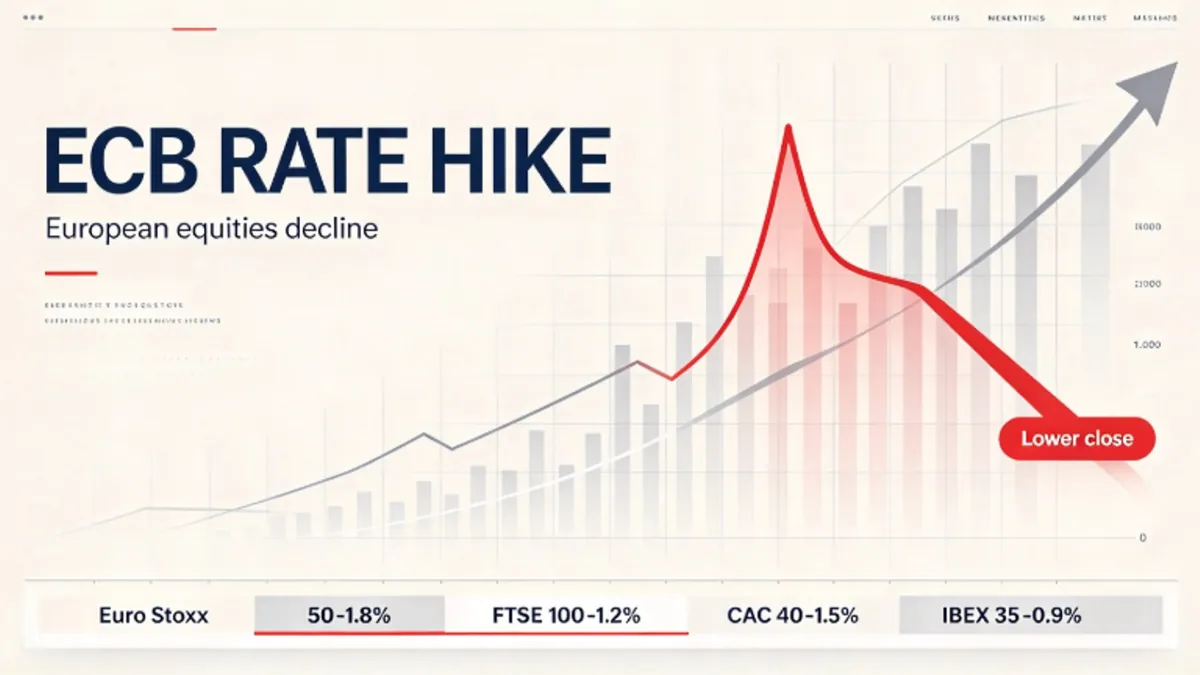
The interest rate hike resulted in a sell-off in European stock markets.
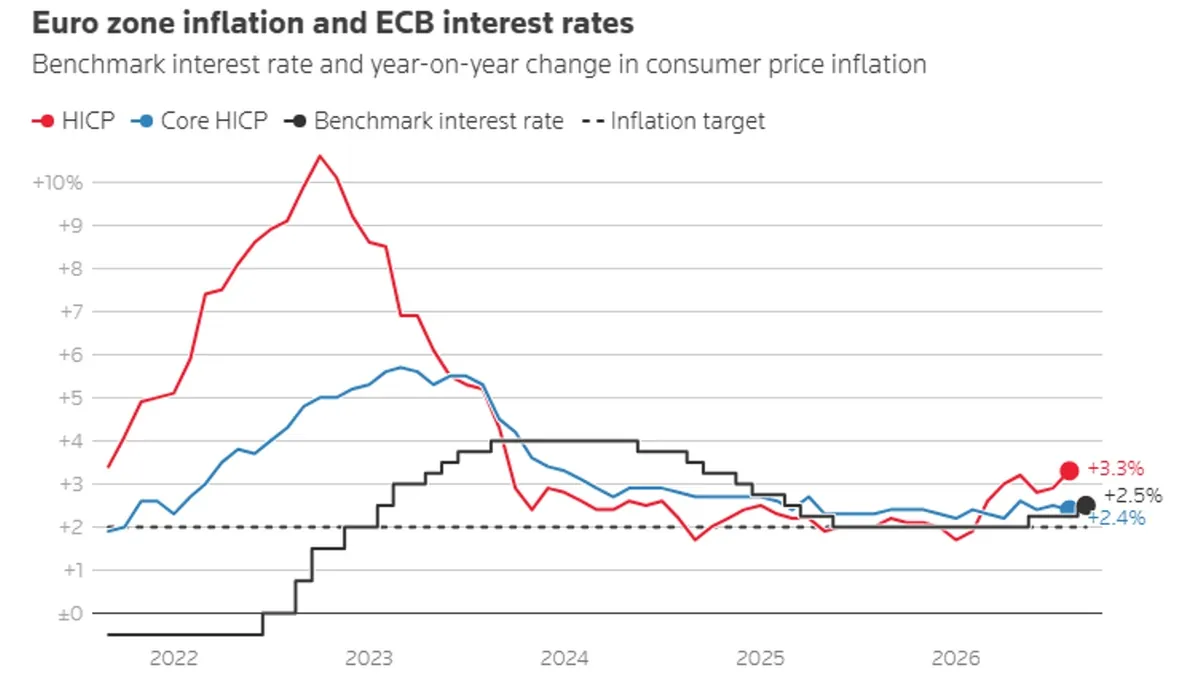
A big correction took place in the European stock market on Thursday. The pan-European STOXX 600 index opened lower, with a 0.7% decline, settling at 635.9. The stock indices of major European countries all weakened, and market risk appetite largely cooled. The central bank raised the interest rate by 25 basis points this time, bringing the benchmark rate to 2.5%. This is the second interest rate hike this year.
The core purpose of the policy implementation is to resist the energy price increase impact brought by the Iran war. A large amount of energy in the Eurozone relies on imports, and fluctuations in oil and gas prices will directly be transmitted to local prices. The central bank has no choice but to tighten monetary policy. The growth expectation for the Eurozone in 2026 has been raised from the 0.8% estimated in June to 0.9%. The inflation expectation has been raised to 3%. The inflation risk has risen, leaving room for subsequent interest rate hikes.
European Central Bank President Lagarde stated in the post-meeting press conference that the upward risk of inflation is increasing, and price pressure may remain above the target for a long time. This statement leaves a lot of room for market interpretation. Trading funds tend to understand that as long as inflation does not fall, the monetary policy will continue to be tightened. The possibility of further interest rate hikes in December is relatively high.
The commodities sector led the decline in European stock markets.
Brent crude oil climbed more than 3 percent during Thursday's trading, topping $105 a barrel. The shipping industry has been hit by a massive attack, the worst since the conflict with Iran began. Market players were concerned about disrupted crude oil supply. Rising energy prices would push up inflation and force central banks to raise interest rates. The mining sector was the hardest-hit area, with the pan-European mining index falling by 3.7% in a single day. Many copper mining companies saw significant declines. Polish KGHM, British Antofagasta, German Aurubis and Anglo American Resources all weakened.
The US PPI data dampens global risk sentiment.
European stock markets declined, not just due to the influence of the ECB alone. US PPI data came in higher than expected, leading to a sell-off in the US stock market and a spread of risk sentiment from the markets to Europe. If the CPI goes up, the chances of the Fed raising interest rates goes up. The monetary policies of major economies around the world are tightening which puts pressure on global stock assets. Global funds are beginning to question the policy trajectories of major central banks.
The US inflation data is volatile and the market does not want to bet too early on interest rate cuts. The effect of inter-market linkage is becoming more and more obvious. US Treasury yields have risen and German bond yields have risen with them. European stock markets' decline put European export enterprises under the pressure of various factors, like changes in external demand, currency fluctuations and increasing financing costs. Macroeconomic data in the US and Europe influence the stock prices of many multinational companies.
The poor performance of consumer brands has dragged the sector down.
Shares in Associated British Foods fell 7.9% in the UK, their biggest single-day drop since January of this year. The reason for the decline was that the sales data of its affordable fashion brand Primark fell short of expectations. Primark is a brand that offers affordable clothing and targets ordinary consumers. During periods of weak consumption, such affordable retail brands were traditionally regarded as defensive sectors. The increase in energy prices has squeezed household disposable income, and residents have cut their shopping expenditures. The rise in energy and food prices has eroded residents' purchasing power. Even affordable retail brands can not completely avoid the impact of the cooling consumption.