The reform of air traffic control in the US is facing a funding crisis
The first phase of the reform in air traffic control in the United States has a large funding gap, and the project cost has been grossly underestimated. There have been repeated overruns and delays in the past.
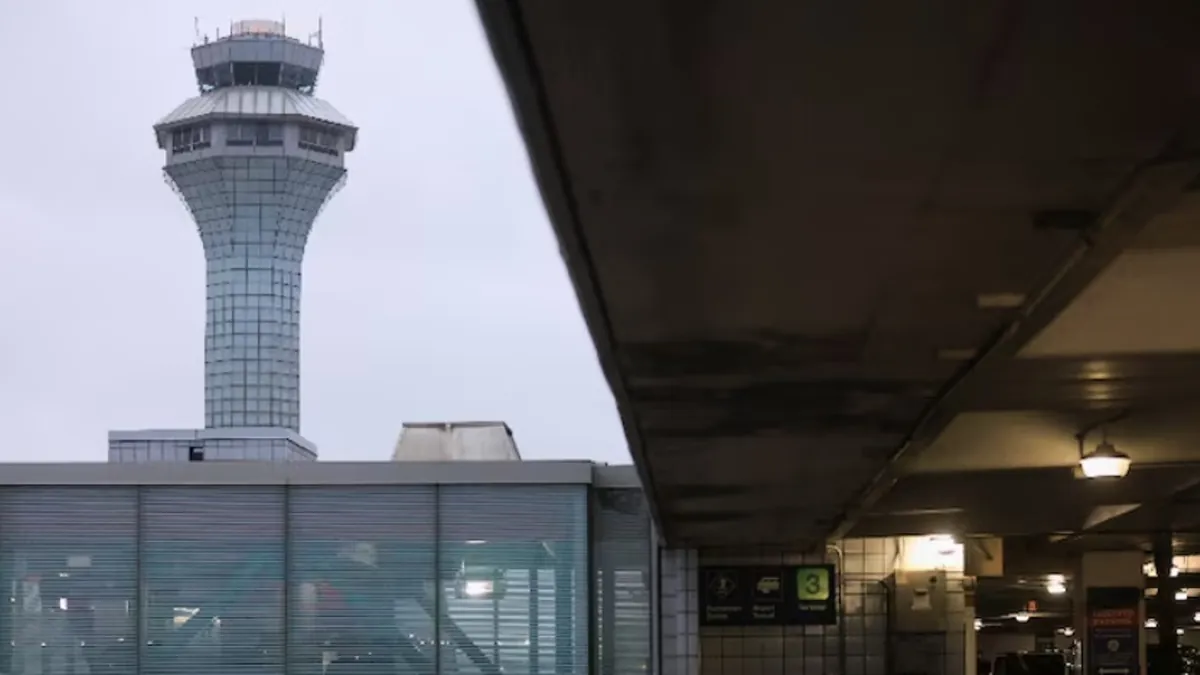
Billions of dollars' worth of reform project faces funding gap.
The Government Accountability Office (GAO) has released a latest report, stating that the air traffic control reform of the Federal Aviation Administration (FAA) is facing a severe funding problem. The first phase of this total budget of $10.6 billion reform plan lacks sufficient funds. The Congress has previously approved a $9 billion special appropriation to support the upgrading of the air traffic control system.
The FAA has allocated $1 billion of its own budget to fill the gap this year. Even so, there is still a $574 million funding shortfall. This gap is due to the serious deviation in the initial cost estimation by the authorities. The initial estimated cost of the core telecommunications upgrade project was $4.75 billion, but the actual cost rose to $5.91 billion. The air traffic control reform has split into over 11,000 independent sub-projects. The accumulation of scattered projects has increased the difficulty of overall cost control.
There are loopholes in project management.
The GAO criticized the FAA's project operation model explicitly. In pursuit of the speed of transformation, it allowed cost uncertainty and even tacitly approved the potential risks of project operation interruption. This management model that only focuses on progress has laid numerous hidden dangers. As of now, the FAA has not completed the full set of operational cost accounting and has not formulated a clear project completion schedule. The overall project is in a state of advancing while adding more budgets.
The GAO stated that this operation model would cause the FAA to repeat its past mistakes. Over the past many years, the U.S. air traffic control transformation projects have frequently encountered problems such as budget overruns and project delays. This reform still follows the past management model. In response to the doubts, the FAA stated that the overall project progress is in line with the plan, and over 95% of the detailed tasks have been completed. However, this progress cannot hide the problem of the funding gap.
Decades of reforms have repeatedly failed.
The current air traffic control system in use in the U.S. has suffered from severe aging problems. Outdated technology has even directly increased the probability of aviation accidents. The coverage area of the American airspace is extensive and the operational pressure is already high. At present, the air traffic control system needs to be compatible with both new and old voice communication equipment at the same time, and the risk of failure is high. Among them, the replacement project of the tower voice communication system is the most risky and difficult part of this reform.
The urgency of technological iteration has put the FAA in a passive position. The outdated system may experience operational failures at any time, forcing the project to move forward quickly. This air traffic control funding crisis is not a short-term anomaly. As early as 1982, the FAA launched the first comprehensive air traffic control upgrade plan, which has been over 40 years ago. During this period, the government invested a huge amount of fiscal funds, but the actual effectiveness of the final implementation was very limited, and a large amount of public fiscal funds were wasted inefficiently.
The congressional hearing is approaching, and the market-based contracting is being implemented.
In December last year, the FAA finalized the market-based cooperation plan, selecting Peraton, a company under Veritas Capital, to undertake the core project of modernization. The single contract amount reached $1.5 billion. Judging from the current funding gap and cost premium situation, the outsourcing model has not effectively solved the problem of budget runaway. The FAA director will attend the congressional hearing to explain the progress of the software project, the funding gap issue, and the subsequent rectification plan.
This hearing will directly determine whether the remaining $574 million funding gap can be smoothly approved. The Congress is likely to conduct strict inquiries. This will create a dilemma. If the Congress refuses to provide additional funds, the risks of the old system will accumulate. If it approves the additional funds, it will indirectly condone the FAA's inefficient project management model, and there may be subsequent fiscal waste.