Tech giants lead the rise, Nasdaq reaches new high
US technology stocks pushed the Nasdaq to a new high. High US treasury yields depressed European stocks.
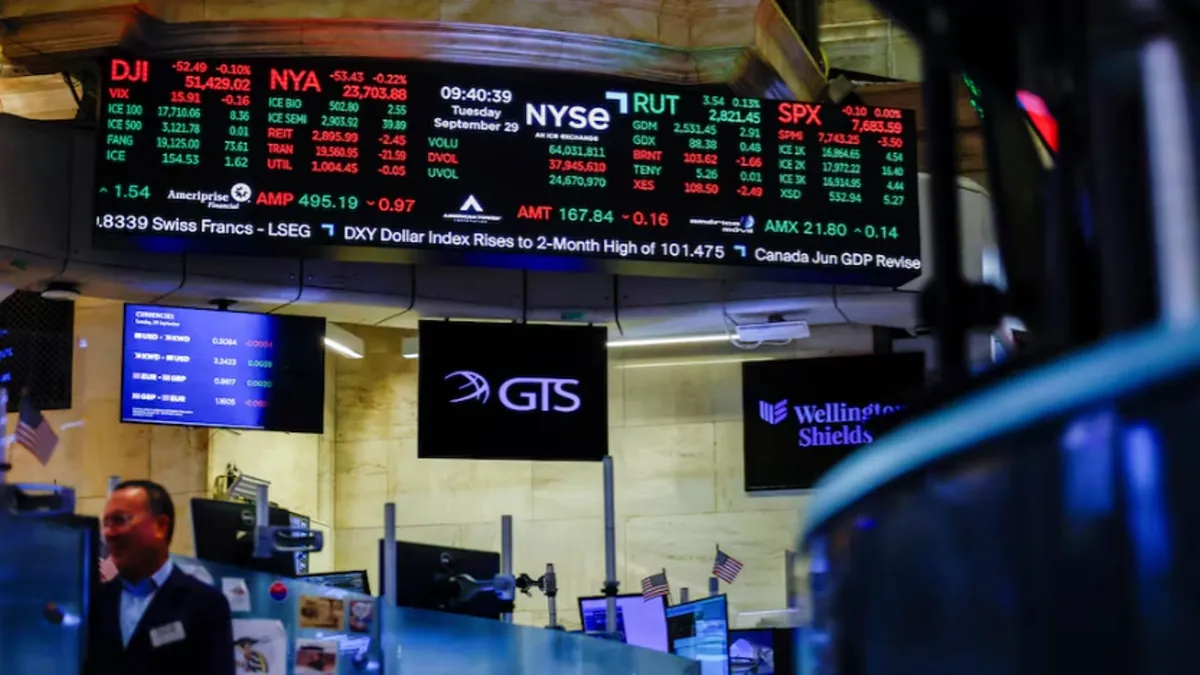
Nasdaq Composite Index soars to record high.
The biggest driver of the index's record growth on October 5th had been big technology stocks. Nvidia and Microsoft were some companies that did really well. The major driving force was the AI boom. Expectations of profits at technology giants were being lifted. The market was willing to pay a premium for high growth. This broke the traditional pricing logic of high-valued technology stocks. Funds poured into the technology sector in a frenzy. Funds from other sectors were withdrawn. The market capitalization of technology stocks has been increasing. Their every move directly determines the direction of the overall market.
10-year US Treasury yield moves up to 5.31%. High interest rates are driving up borrowing costs for companies. The worst performers have been high price-to-earnings growth stocks. But the tech giants have withstood the pressure with their strong cash flow. Traditional manufacturing and real estate sectors are facing revaluation. Money has moved out of risky assets and into fixed income markets. Spread on high-yield bonds has become an important indicator. The wider the spread, the less appetite for market risk. The stock market may have a deep correction.
European shares are under pressure, with regional stock markets hit by the French fiscal crisis.
European stock markets were broadly weak in their performance on the day. The French market took the worst beating. French stocks hit a six-month low. Investors were very concerned about the fiscal situation in France. The government debt rose. Parliament blocks the plan to reduce the budget deficit. Market panic as political deadlock yields on French government debt soared. The worry spread throughout the Eurozone. The euro exchange rate dropped to a 17-month low. Currency depreciation further undermined foreign investors' confidence. The profit expectations of multinational enterprises were lowered.
At the individual stock level, a black swan event also occurred. Schneider Electric acquired the US software company PTC. The market did not approve of it, and the stock price plummeted directly. Investors were worried about the integration risks of cross-border acquisitions. The fundamental economic situation of Europe was already fragile. High energy prices were still eroding corporate profits. Euro stocks lacked strong upward catalysts. Funds were withdrawing from Europe and moving to the United States.
Weakening US employment data and expectations for interest rate hikes.
The US employment data in September showed a weak performance. The number of new jobs was lower than expected. The data for the previous two months was also largely revised downward. Market expectations for an interest rate hike in October have sharply cooled. The probability has dropped to around 24%. However, the expectation for an interest rate hike in December is still highly priced by the market. The policy path of the Federal Reserve remains unclear. The consensus is that high interest rates will persist for a longer period.
The stock market is extremely sensitive to every statement from the Federal Reserve. The failure of the expectation for a rate cut will trigger selling. The cooling of the expectation for a rate hike brings a rebound. Short-term funds take advantage of the frequent release of data for arbitrage. Long-term funds pay more attention to the real profits of enterprises. Monetary policy is only an external environment. Companies with better-than-expected performance can navigate through the cycle. The stickiness of inflation remains strong. This limits the space for the Federal Reserve to cut interest rates.
Global stock markets are showing divergence.
The markets in Latin America have performed well. The stock market and currency of Brazil have risen. The results of the first round of the presidential election have been announced. The right-wing candidate has performed better than expected. The improvement in political expectations has boosted market confidence. Foreign capital has re-entered emerging markets.
The commodity market is also undergoing subtle changes. International oil prices have declined. The G7 has committed to increasing supply. Oil exports from the Middle East are also increasing. The fall in oil prices helps to alleviate global inflationary pressure. This is positive for the overall stock market. However, stocks in the energy sector will face a correction. The price of spot gold remains stable. Safe-haven funds are still seeking a safe haven. Global asset allocation needs to be more flexible. Diversified investment is the only strategy to deal with the differentiation.