The delayed harvest of soybeans in the United States has led to a rush to purchase
Heavy rain has kept falling in US soybean growing regions. It has caused shortages in the spot market and held up soybean harvest work. Buyers at processing plants have to pay extra to get soybeans.
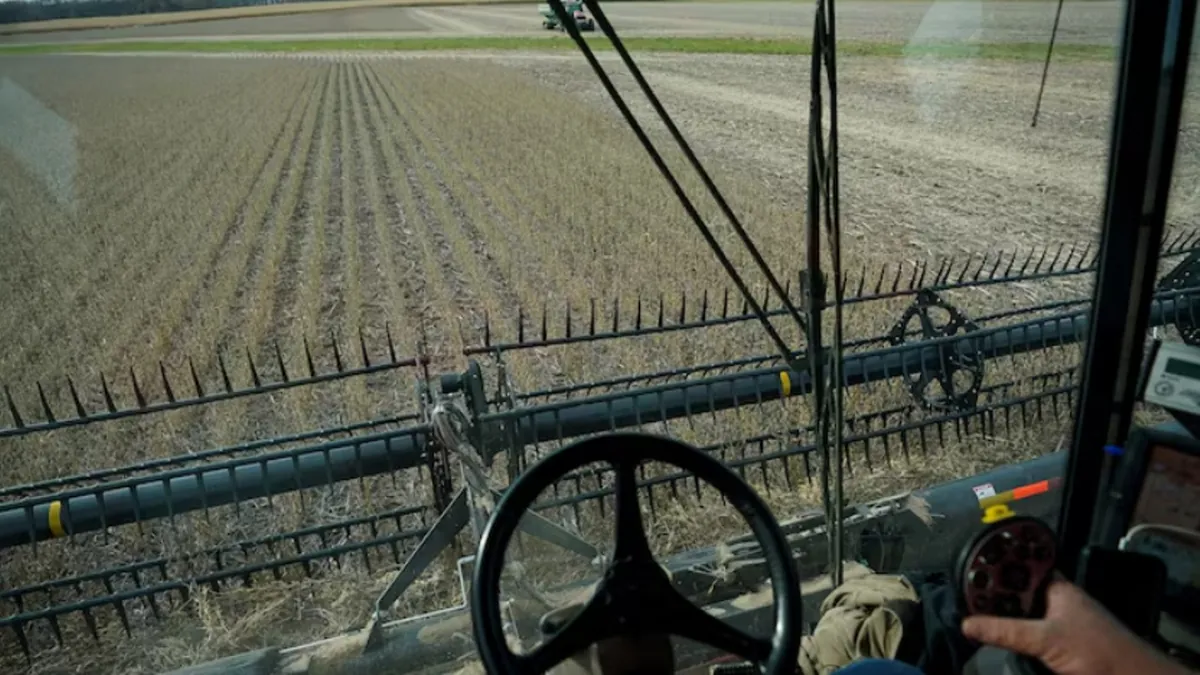
Heavy rainfall has halted the progress of soybean harvesting, and the spot market has rapidly entered a state of shortage.
Since the end of summer this year, the core soybean-producing areas in the Midwestern United States have been experiencing continuous rainfall. A large number of farmlands have become muddy, and harvesting equipment cannot operate on the ground, resulting in a large delay in the progress of soybean drying and maturation. Meteorological forecasts indicate that subsequent rainfall will continue, further compressing the harvesting window period.
In previous years during this period, the new season's soybeans had already been in bulk supply, and the market's spot circulation was abundant. However, this year, the new soybeans have a largely delayed supply schedule, and the remaining inventory from the previous season has basically been consumed. Many local growers have no soybeans to sell, and the available supply in the market continues to decrease. The supply at the spot level has contracted, pushing up the valuation of soybean futures at the underlying level.
Processing plants are snapping up supplies at high prices.
In recent years, the high demand in the biofuel industry has led to continuous expansion of soybean crushing capacity in the United States. Industry experts predict that this year's soybean crushing volume will reach a record high of 2.78 billion bushels. With high demand for crushing and low supply, major processing enterprises, in order to ensure the operation of their production lines, have begun to actively raise the spot prices and purchase soybean supplies at high premiums.
Several crushing plants in Iowa have raised the spot discount, and the premium for short-term delivery orders has been continuously increasing. The spot premium of early processors remained at 65 cents per bushel, but within just a few days, it rose to 85 cents per bushel. Global agricultural giant Cargill has a more aggressive pricing strategy, and short-term urgent delivery orders have had a premium that was once $1 per bushel higher than the November futures price. The regional rush for supplies has spread rapidly, and industry leaders such as ADM, CHS and Bunge have all raised their purchase prices to compete for the limited supply of spot goods.
Insufficient raw materials have hindered the operation of the crushing process.
Many enterprises failed to obtain sufficient raw materials and had to voluntarily reduce the crushing load and slow down the operation speed of the production line. The CBOT soybean meal 10-month contract reached a high level, breaking the new high set since the contract's launch. The lack of raw materials at the crushing end led to a reduction in soybean meal and soybean oil output. Soybean meal, as the core feed for livestock breeding, maintains a stable market demand. The 10-month soybean meal contract price surpassed the 12-month contract price, forming a reverse structure of near-month premium, which is the first time this trend has occurred in more than two years. The strengthening of the near-month premium is a typical spot-driven market trend.
At present, the market logic has formed a closed loop: delayed harvesting due to rain, slow new bean supply, exhaustion of old bean inventory, raw material shortage, reduced crushing, and contraction of soybean meal supply. Each link is positive for soybean futures. Last year, due to trade factors, the demand for US soybeans was weak, and the spot price was under pressure. This year, the situation has completely reversed, with the shortage of spot supply driving the price recovery and uplift of futures prices.
This shortage of soybean supply is not a local phenomenon; it has spread to multiple core production areas in the United States. Crushing enterprises in the central and western regions such as Iowa and Minnesota, and in the eastern region such as Indiana, are all facing the problem of insufficient raw materials. Various processing plants have followed suit to raise purchase prices to retain local supplies and attract external supplies. Feedback from farmers in multiple production areas indicates that the continuous heavy rain in August caused severe waterlogging in the fields, delaying the crop maturity cycle by several weeks.