The OECD's new steel regulations have taken effect, leading to an escalation of trade barriers
The OECD has introduced a new framework for regulating steel production capacity, in addition to the upgraded trade constraints by the G20. The global steel trade has changed.
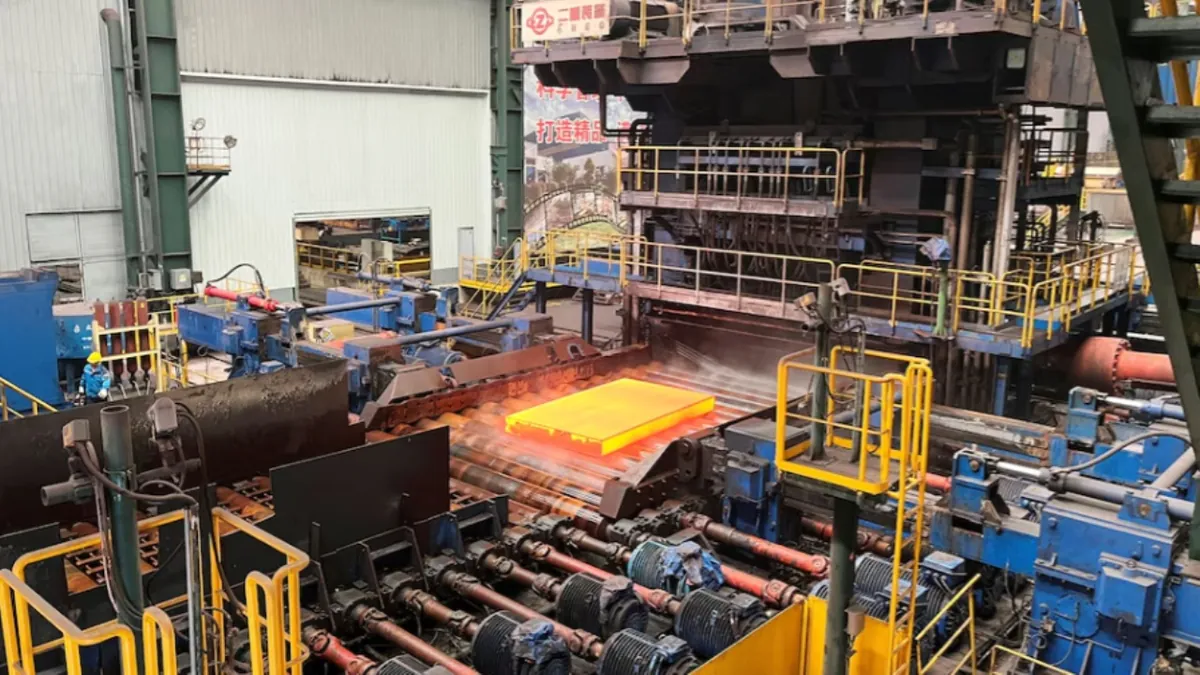
Global steel production capacity and trade regulations have been tightened.
The 28 member countries of the OECD have reached a consensus to introduce restrictive measures addressing issues such as global excess steel production capacity, illegal subsidies, and disorderly exports. The core content of the new regulations is very clear: countries are prohibited from subsidizing loss-making steel enterprises, and at the same time, the support for newly-built steel mills that do not have economic viability is also prohibited.
The member countries need to uniformly strengthen anti-dumping and anti-subsidy investigations. Additionally, each country should share the traceability data of steel imports to accurately identify and investigate tariff avoidance behaviors and close trade loopholes. The G20 trade conference has also listed non-market policies in the steel industry as a core topic. At the G20 finance ministers' meeting in early September, all member countries except China unanimously agreed to rectify the trade distortions in the steel industry.
Global overcapacity and comprehensive escalation of trade barriers.

According to the OECD data, the current global steel overcapacity scale is 601 million tons. Global steel production is highly concentrated, with China and India ranking as the top two producers globally, accounting for over half of the global steel output. The two core steel-producing countries did not participate in this OECD steel forum, which also led to significant regional differences in the implementation of the new regulations.
The biggest market impact of this new policy is the normalization and scale-up of global steel trade barriers. The United States has already implemented high tariffs on steel imports, and currently half of the global steel import tariffs are contributed by the US market. The US Trade Representative explicitly stated that all countries will follow the US in introducing trade protection measures, specifically restricting the import of low-priced steel.
Now, many European countries have responded positively. Poland and other EU countries have explicitly stated that overseas steel subsidies and dumping have severely impacted their domestic steel industries and urgently need to use trade policies to hedge risks. The new regulations require improving steel traceability data and strictly checking the export of disguised tariff-avoiding steel derivatives. This means that the indirect export channels for steel have also been tightened, and the originally diverted production capacity can not be exported.
The market generally believes that the steel trade barriers implemented by the United States are not only beneficial to the domestic industry but also benefit other countries that follow suit. Under a unified trade protection framework, the inefficient domestic production capacity of each country is protected. Previously, global steel was freely circulated, and prices followed global supply and demand fluctuations. Now, regional markets have been divided by trade barriers, and the futures market in each region has developed independently.
At the same time, countries shutting down loss-making steel mills and canceling inefficient production capacity subsidies will gradually compress global ineffective production capacity. In the long term, the disorderly expansion of the industry is ended, and the pressure of overcapacity can be gradually relieved, which will bring benefits to the future repair of steel futures prices.
The short-term market is under significant pressure.
Overseas export channels have been comprehensively tightened, while domestic steel production capacity can not effectively be diverted. Coupled with stable terminal demand, the main futures varieties such as rebar and hot rolled steel are experiencing fluctuations and pressure. However, the global unified crackdown on illegal subsidies and the elimination of inefficient production capacity will, in the long term, optimize the industry's supply and demand structure.
As ineffective production capacity is gradually eliminated, the global steel oversupply pressure will gradually ease, and the futures price center is expected to steadily rise. The market is no longer simply speculating on short-term supply and demand, but begins to price in the long-term value brought by industry standardization. Coupled with the expectation of the traditional steel market's demand peak season in September and October, the depth of steel prices' decline is expected to be limited.